
Once a tree is down, the stump is still there — and homeowners often ask us whether it's worth burning it out themselves instead of paying for grinding. It's a fair question. Here's the honest comparison, not just the sales pitch.
Stump Grinding: What It Actually Involves
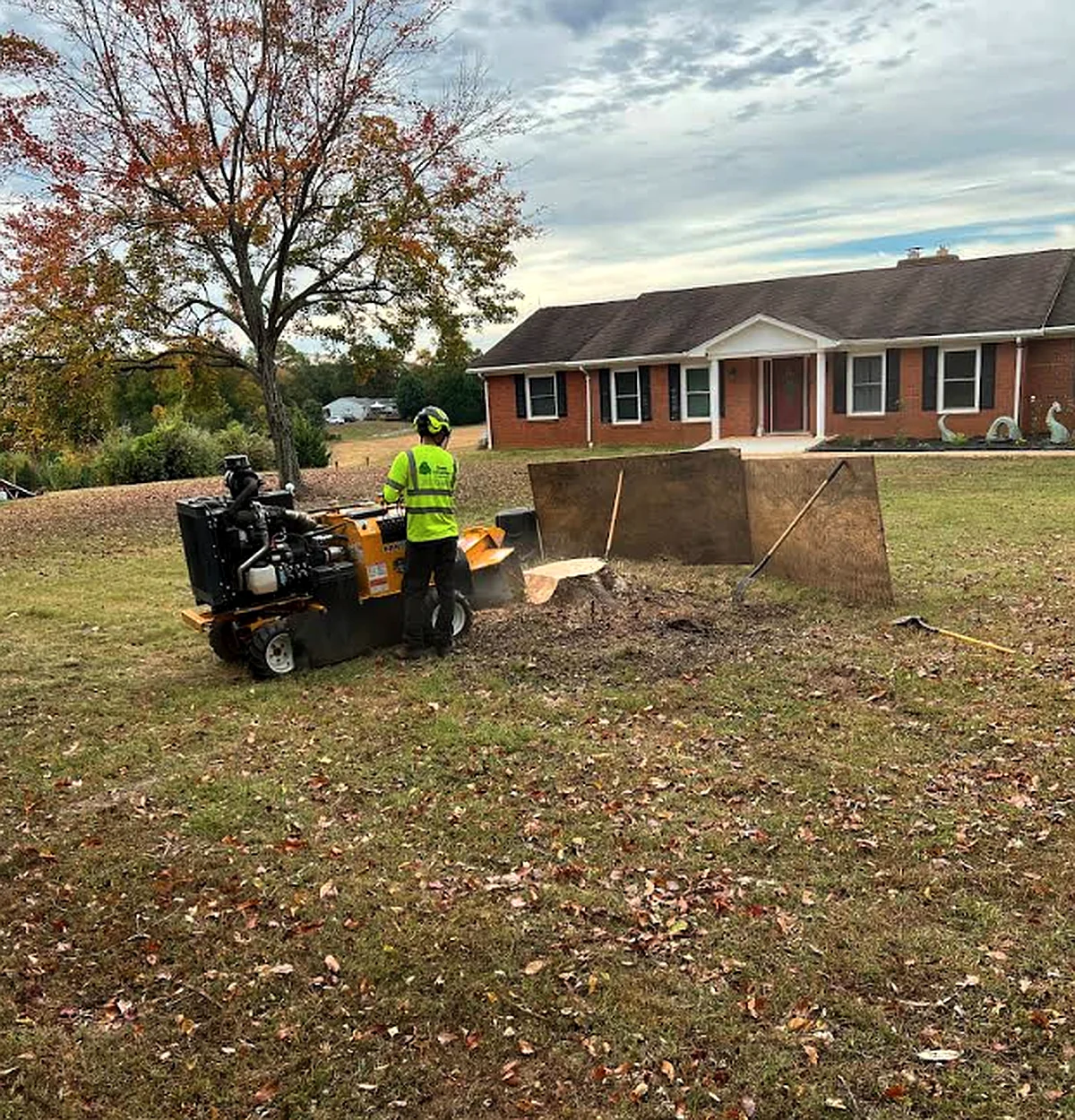
A stump grinder is a machine with a rotating cutting wheel that chews the stump down into wood chips, typically 4-6 inches below ground level. The process takes anywhere from 15 minutes to an hour depending on stump size, and when it's done, the area is ready for grass seed, mulch, or whatever you want to do with the space.
Pros
- Done in under an hour, most of the time
- No permit required
- No fire risk
- Fully removes the stump below grade
- Property is usable again immediately
Trade-offs
- Has an upfront cost (typically $150-$500)
- Leaves wood chips to clean up or repurpose
- Roots deeper than the grind depth remain and decompose naturally over time
Burning: What It Actually Involves
Burning a stump means drilling holes into it, filling them with an accelerant (or just letting a fire smolder over days), and waiting for it to slowly consume the wood. It sounds simple, but in practice it's a much bigger commitment than most people expect.
Cons
- Often takes days to weeks of monitoring
- Usually requires a burn permit in Virginia counties
- Real fire risk, especially near structures or in dry conditions
- Rarely removes the stump completely — often leaves charred remnants and roots
- Not allowed at all in some jurisdictions or HOA communities
Trade-offs
- Lower upfront cost if you already have the tools
- No equipment rental needed
The Legal Side: Burn Permits in Virginia
Most Virginia counties, including Fauquier County, require a burn permit for open burning, and rules often get stricter during dry seasons or high fire-danger periods. Burning without a permit — or during a burn ban — can result in fines, and if the fire spreads even accidentally, the liability falls on the property owner.
Grinding sidesteps this entirely. There's no fire, no permit, and no risk of a neighbor calling it in.
What About Cost?
Burning looks cheaper on paper if you're doing it yourself with tools you already own. But factor in the real time cost — multiple days of monitoring a fire, the risk of an incomplete result that still needs to be dug out or ground anyway, and the very real cost of dealing with an escaped fire — and grinding usually comes out ahead once you count everything, not just the sticker price.
See our stump grinding page for what a professional job actually includes.
When Might Burning Still Make Sense?
If you're already doing a controlled agricultural burn on a large rural property, well away from structures, with a permit already in hand — combining stump disposal into that existing burn can make practical sense. But as a standalone method just to get rid of one stump, it's rarely the better choice compared to grinding.