Tree Removal After Storm Damage: What to Do First
Tree removal after storm damage is a different situation from a routine removal — and knowing what to do in the first few hours matters. When a storm hits Fauquier County, it usually leaves more than puddles behind. Our clay-heavy soil holds water fast, which means trees that look perfectly healthy can still have shallow, waterlogged root systems that give way in a strong nor'easter or a fast-moving summer thunderstorm.
Knowing what to do in the hours right after a storm — and what not to do — makes a real difference for your safety and your property.
Signs a Tree Needs to Come Down After a Storm
Not every storm-damaged tree needs to be removed. But if you see any of the following, treat it as urgent and call a professional right away:
Leaning that wasn't there before
A tree that's shifted or started leaning after the storm can come down with no further warning.
Cracked or split trunk
A structural failure, not something to wait out — this is one of the clearest signs the tree is compromised.
Exposed roots or uprooting
If the root ball has visibly lifted or shifted, the tree has lost its anchor and can fail completely.
Large limbs hung up overhead
A broken branch still caught in the canopy ("widowmaker") can fall days after the storm has passed.
Debris tangled in the branches
Fencing, wires, or debris caught in a damaged canopy adds unpredictable weight and tension.
Touching or near power lines
Never approach this yourself — call the utility company before anyone gets close.
If you see any of these, don't wait. A weakened tree can collapse without warning, even hours or days after the storm has passed.
Why You Shouldn't Attempt This Yourself
A healthy tree behaves predictably when you cut it. A storm-damaged one doesn't. It's often under tension you can't see — a leaning trunk, a partially-snapped limb, or a root system holding on by a thread can all release that tension suddenly and violently the moment a cut is made.
This is exactly the kind of situation that leads to a barber chair split or an unpredictable fall direction, even for people with chainsaw experience. Add in the fact that debris, downed lines, and unstable ground are often part of the picture, and a storm-damaged tree becomes one of the more dangerous jobs in tree care.
In Warrenton, removal may also involve permits depending on location, or coordination with the utility company if lines are involved. Let a licensed and insured team handle it — this is one situation where the cost of a mistake is measured in more than money.
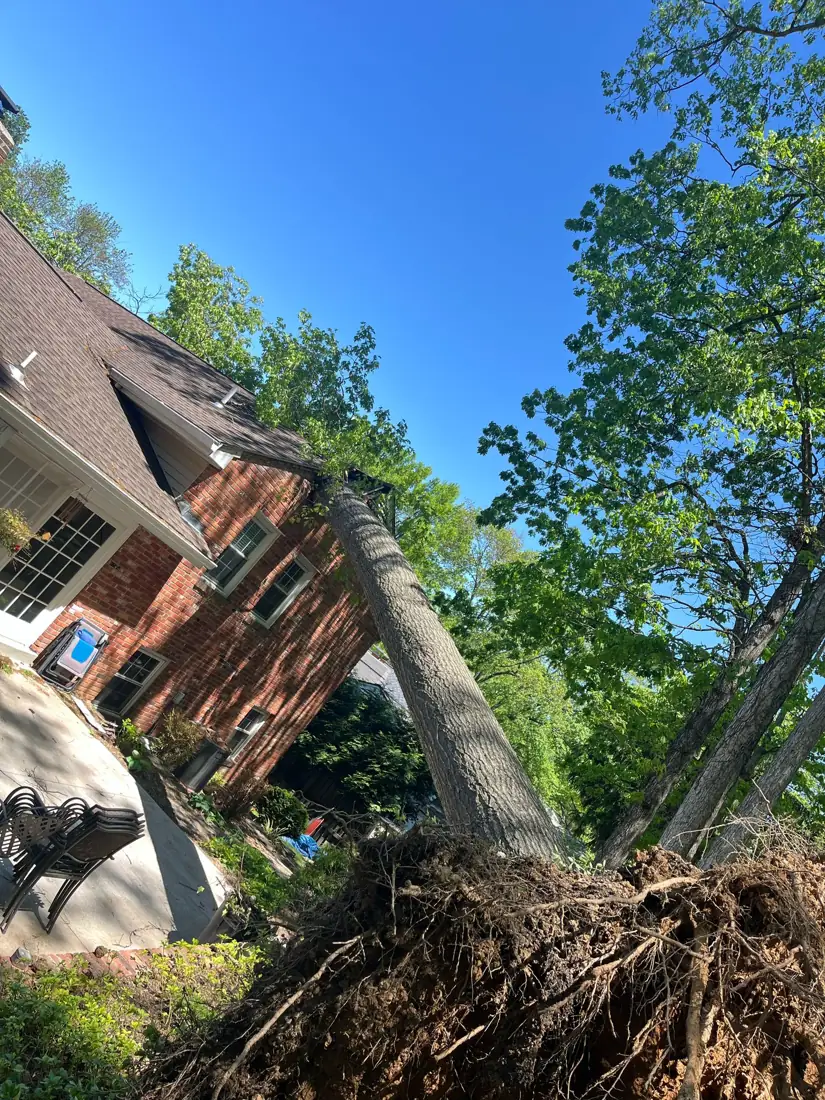
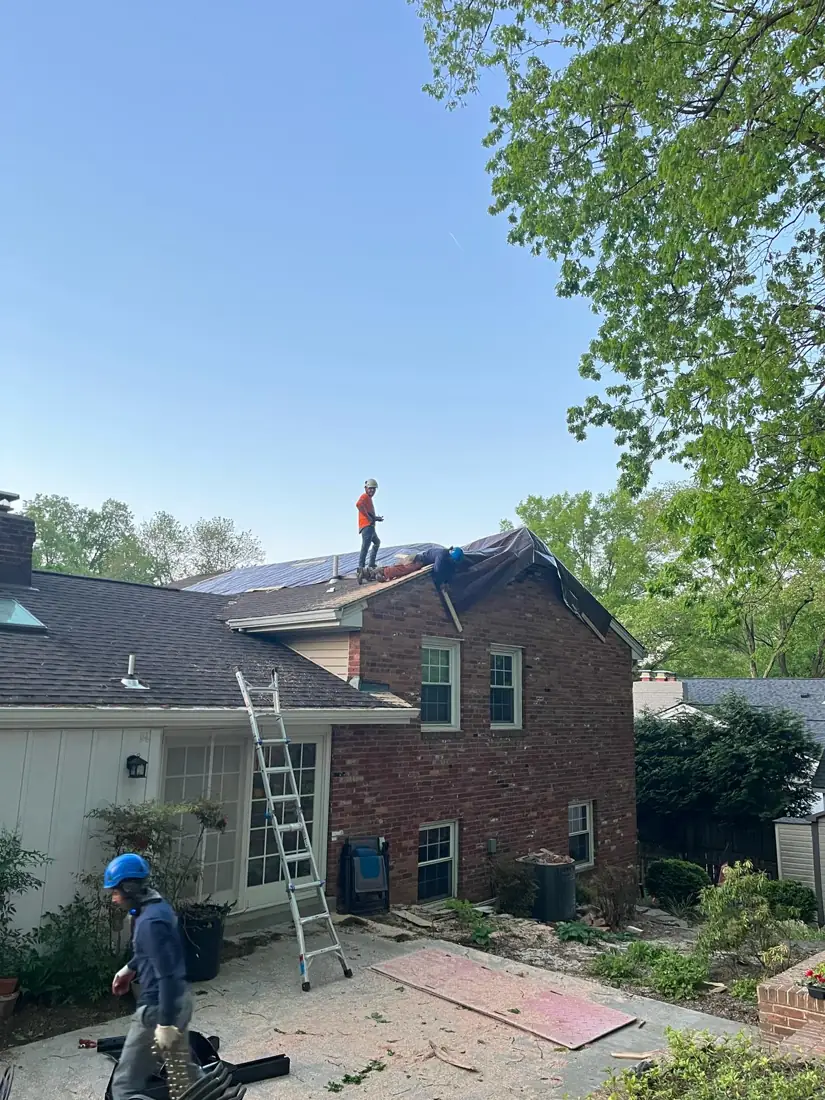
What to Do If a Tree Has Fallen on Your Property
Stay clear
Keep everyone — people and pets — away from the tree and the area it could still shift into.
Call 911 if lines are down
Downed power lines are a life-safety issue first. Don't wait on us for this part — call emergency services and the utility company immediately.
Take photos
From a safe distance, document the damage for your insurance claim before anything is moved or cleaned up.
Call a professional
Reach out for emergency tree removal — we prioritize active hazards over scheduled work.
Will Insurance Cover It?
Often, yes — especially if the tree damaged your home, garage, or another structure. Coverage depends on your specific policy, so this isn't something we can promise on your behalf, but we can provide documentation and photos of the damage to support your claim. The photos you take in step 3 above matter here — insurers generally want to see the damage before cleanup begins.
Why Warrenton Homeowners Call Us After a Storm
We've helped homeowners across Warrenton and Fauquier County recover from storm damage since 2015. We're licensed and insured, equipped to handle emergency removals even in hard-to-reach or high-risk spots, and you'll work directly with the crew that shows up — not a call center dispatching whoever's available.
From the first call to final cleanup, we walk you through what's happening and why, especially if a permit or utility coordination is involved.