5 Types of Tree Removal (And How to Know Which One You Need)
"Tree removal" sounds like one job, but it isn't. A dead pine standing alone in an open backyard comes down completely differently than a leaning oak wedged between a house and a power line. The method matters — for safety, for your property, and for what you end up paying.
We've been removing trees around Warrenton and Fauquier County since 2015, and the honest answer we give homeowners is almost always the same: it depends on the tree. Here are the five approaches we actually use, what each one is for, and how to get a rough idea of which one applies to your situation before you even call anyone.
1. Standard (Direct Felling) Removal
This is the tree removal most people picture: the tree is cut at the base and directed to fall in one piece, in one direction. It's the fastest and most cost-effective method — but it only works when there's enough open space for the tree to fall safely, with no house, fence, shed, or power line in the way.
Before cutting, an arborist checks the tree's natural lean, wind conditions, and the size of the "drop zone" needed — techniques documented in detail by the USDA Forest Service's guide to directional felling. A notch cut on the falling side controls direction, and a back cut on the opposite side finishes the job. Done correctly, it's controlled and predictable. Done by someone without the right training, it's one of the more dangerous ways a tree removal can go wrong.
2. Sectional (Piece-by-Piece) Removal
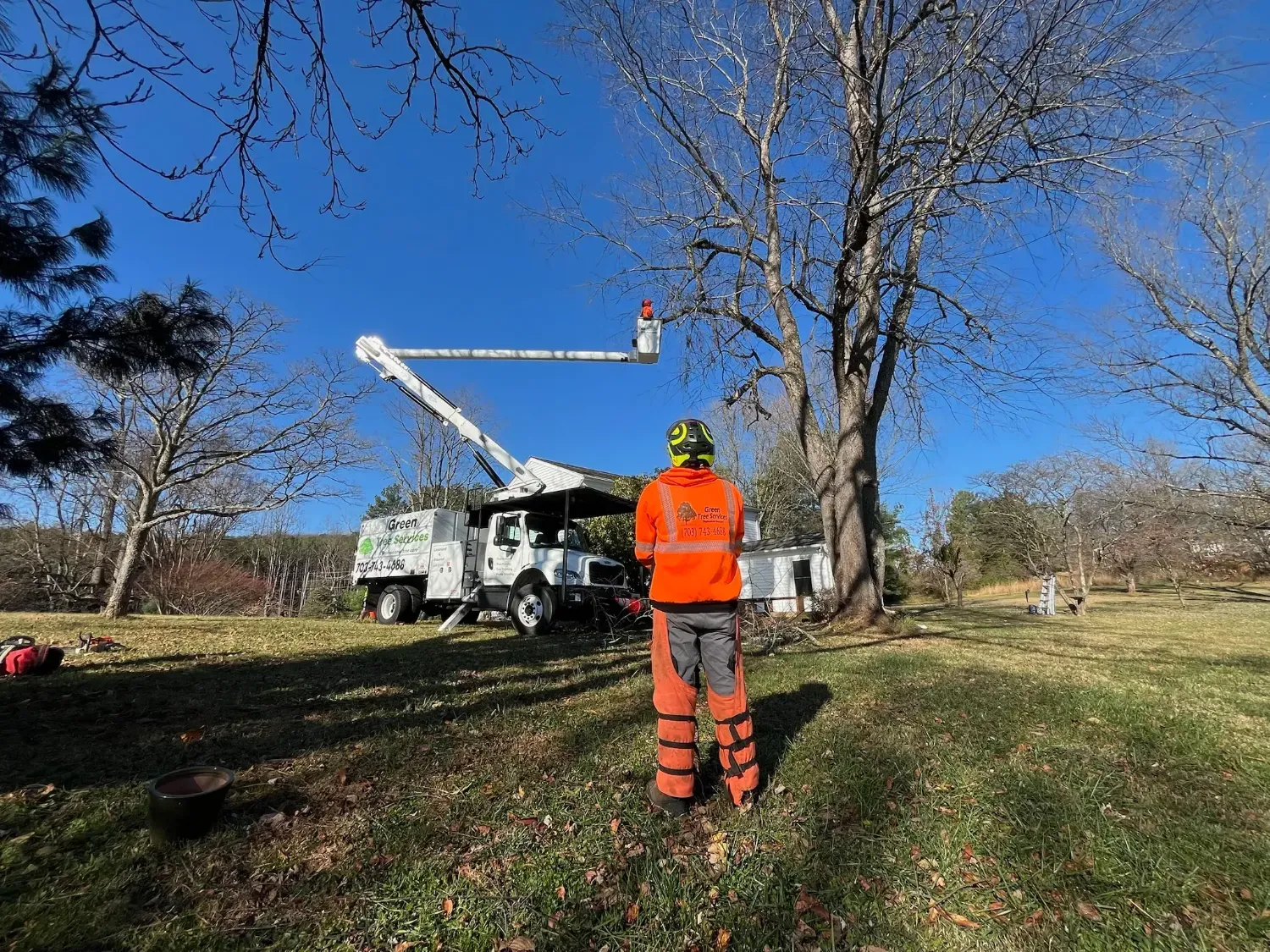
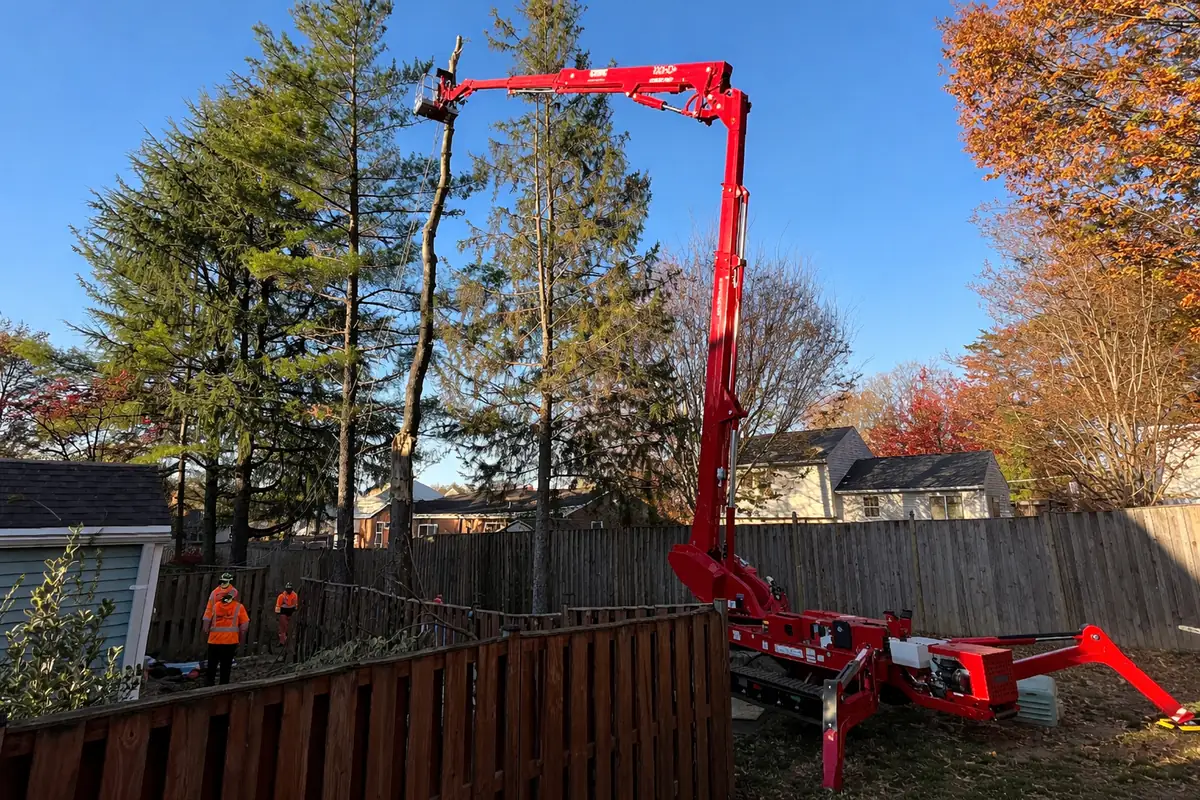
When a tree is too close to a structure, a fence, another tree, or a power line to fell it whole, it comes down in pieces instead. A climber (or a crew working from a bucket truck) removes the canopy first, then works down the trunk in manageable sections, lowering each one with a rope rather than letting it drop.
This method takes longer and costs more than standard felling — more time, more equipment, more hands — but it's the difference between a controlled removal and a tree (or a large limb) landing on your roof. Most residential removals in tighter Warrenton neighborhoods end up using this approach, at least partially.
3. Crane-Assisted Removal
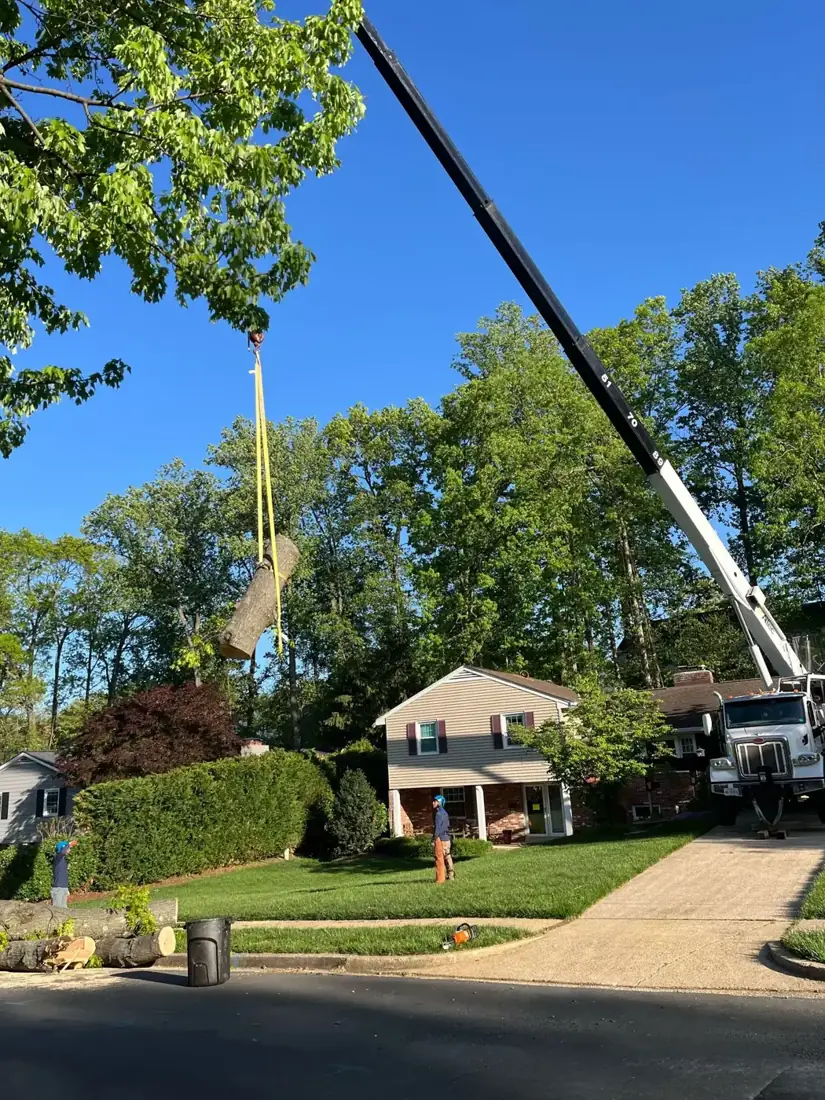
For very large trees, or trees positioned where even sectional removal carries too much risk, a crane lifts and lowers sections in a fully controlled way instead of relying on rope and gravity. This is standard practice for large hardwoods near a home, trees over a driveway or patio, or anything too heavy to safely rig by hand.
It's the most equipment-intensive option, which is also why it's the one most companies subcontract out — waiting on a rental crane or an outside crew adds days to the timeline. We own our crane, which means large or high-risk removals don't get stuck waiting on someone else's schedule.
4. Emergency Removal
A tree that's already fallen, split, or is actively leaning after a storm isn't a standard removal — it's a stabilization problem first and a removal problem second. The tree may be under tension, resting on a structure, or tangled with a power line, all of which change the approach completely.
The first priority is making the situation safe: securing the tree so it can't shift further, keeping people clear of the area, and coordinating with the utility company if lines are involved. Only after that is it treated like a standard or sectional removal. If you're dealing with this right now, see our emergency tree services page for what to do while you wait for help to arrive.
5. Land-Clearing / Multi-Tree Removal
Removing one tree and removing thirty trees from a lot are different jobs entirely. Land-clearing removal uses heavier equipment sized for volume rather than precision — the goal is efficiently clearing a section of property, not carefully protecting a single specimen tree next to a flower bed.
This approach is common ahead of new construction, reclaiming overgrown property, or opening up a section of land that's been left unmanaged for years. If you want to keep specific mature trees while clearing everything around them, that's still possible — it just needs to be flagged before the crew starts. More detail on how we approach this is on our land clearing page.
Which Types of Tree Removal Fit Your Situation
- Tree is in an open yard, no structures nearby: likely standard felling.
- Tree is close to your house, fence, or a neighbor's property: likely sectional removal.
- Tree is very large, or positioned over something valuable: likely crane-assisted removal.
- Tree is already down, split, or leaning after a storm: emergency removal — call directly rather than scheduling online.
- You're clearing several trees at once, or prepping a lot: land-clearing removal.
This is a starting point, not a diagnosis. The only way to know for sure is to have someone look at the actual tree — which is exactly what a free estimate is for.
What Does Tree Removal Cost?
Cost depends mostly on which of the methods above your tree needs, plus its size and how easy it is to reach. We break down real price ranges by method — and what pushes a job up or down — in our guide to the real cost of tree removal. The only accurate number, though, comes from someone looking at your actual tree: see our tree removal page for a free, written, on-site estimate before any work begins.